Like anything else involving stringent rules and regulations, grammar harbors a hefty share of obsessive fanboys and fangirls who enjoy debating its ins, outs, and other various quirks. So of course controversies break out in academia, the media, and even intimate conversations between friends. After all, you don't have to have an English degree to get steamed up when someone uses poor grammar. Here are a few of the ones that churn stomachs and angry up the blood, in no particular order.
-
The Oxford Comma
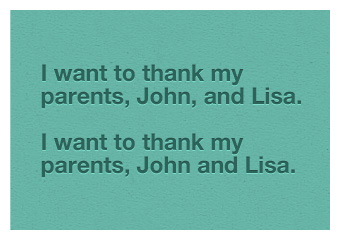 Debates regarding whether the Oxford comma should keep on being used are comparable to those about the death penalty and/or abortion. Seriously. Most grammarians have an opinion on the subject, and their opinion is always right and never wrong ever and also they will use an insistent voice when relaying it.
 -
The pronunciation of "controversial"
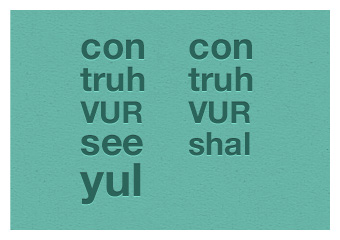 Go figure. Americans stand divided over whether to pronounce it "con-truh-VUR-see-yul" or "con-truh-VUR-shal." You don't even have to hop a plane across the pond to take part in the battle. Funny enough, Merriam-Webster‘s and The American Heritage Dictionary acknowledge both pronunciations. So now that a definitive answer exists, it's time to get back to arguing about whether to call it soda, pop, or coke.
 -
Double negatives
 Although grammatically correct, debates regarding the permissibility of double negatives keep flaring up from time to time. Talks apparently originated when linguists pondered acceptance of the often controversial African-American Vernacular English, within which the grammar tweak is quite common. Unsurprisingly, these debates inherently come saddled with some rather unfortunate overtones.
 -
"Irregardless"
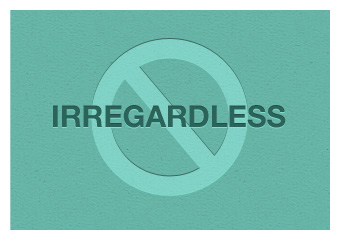 "Irregardless" appears in at least three different official dictionaries, though all of them admit it's not exactly formal. More traditional grammar aficionados don't think the word deserves to move beyond its slang origins, while others think it's about time the rule-makers acknowledge the evolution.
 -
Ending sentences with prepositions
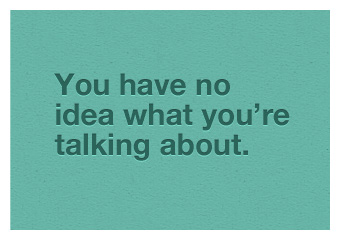 Here's one the grammarians out there just can't get enough of. Ending sentences with prepositions isn't actually incorrect, but teacher's gonna teach. The myth circulates so widely, English speakers argue the rule's veracity constantly despite the clear-cut answer.
 -
"Hanged" vs. "Hung"
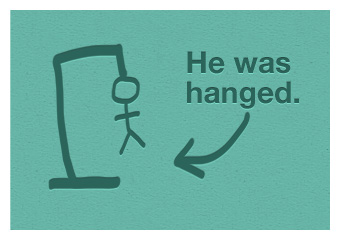 Perhaps not as controversial as some of the other grammar rules presented here, people still mix up — and sometimes argue — over what situations require "hung" and which ones require "hanged." The latter works when describing executions and suicide, while the former works pretty much anywhere else.
 -
Like as a conjunction
 Winston Cigarettes unintentionally ignited a pretty nasty grammatical furor back in 1954 with its use of like as a conjunction. Slogan "Winston tastes good like a cigarette should" was once considered so egregious, many broadcasters (such as Walter Cronkite) refused to even read it on air. Further outrage ensued when dictionaries acknowledged that the company was not committing any grammatical error, even touting it as an example of proper conjunction usage. Suffice it to say, this isn't exactly much of a controversy these days.
 -
"Good" vs. "Well"
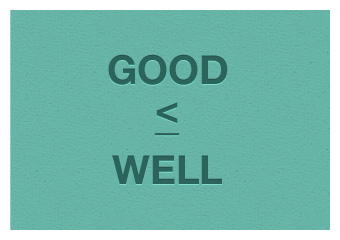 Feel like setting off an unabashed grammar geek? Mix up "good" and "well" when talking health and happiness. Although not a major controversy splitting the linguistic community, confusing the two will undoubtedly set off a minor mental explosion within individuals.
 -
Text/Internet speak
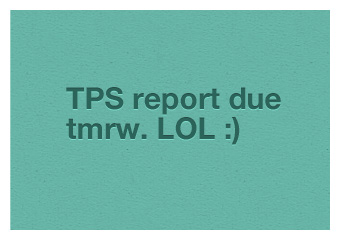 Traditional grammarians consider Internet and text speak a portent of irreversible vernacular doom. Whether abbreviations, acronyms, the remaining shreds of 1337 5P34|
-
Starting sentences with "however"
 Strunk & White loyalists pooh-pooh the thought of beginning a sentence with "however" when one really means "nevertheless." Everyone else just thinks them a bit outdated.
 -
Starting sentences with "but" or "and"
 Like their "however" counterpart, "but" and "and" are actually perfectly acceptable ways to start a new sentence. Not every sentence, of course, but some flow even better when launched with a conjunction. Once again, detractors detract simply because of tradition.
 -
Gender-neutral pronouns
 English only involves one gender-neutral pronoun: "it," and many in the genderqueer community find the word either insulting or inaccurate. These individuals oftentimes create their own unique alternatives, though none have obviously entered the mainstream vernacular yet. In order to accommodate their desires, however, a gender-neutral pronoun needs eventual inclusion, which will prove a massive boon to LGBT equality and acceptance.
 -
Split infinitives
 Yet another grammar rule students frequently find smashed into their heads that doesn't actually exist. Or, rather, its existence is rather dubious. Split infinitives jam an adverb between an unmarked verb and preposition — and they're perfectly acceptable. Just don't tell the teachers whose notes tell them otherwise, OK?
 -
Passive voice
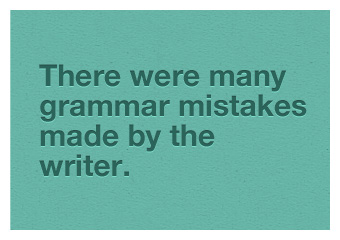 Hit up grammar forums across the Internet and witness the hordes defending passive voice. While technically grammatically sound, many writers think stigmatizing its usage compromises experimenting with the language.
 -
Punctuation inside quotation marks
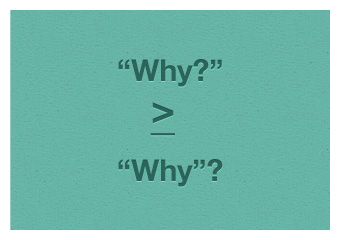 Depending on the English-speaking nation, punctuation marks either go inside quotation marks (America) or outside (pretty much everywhere else). Considering the fact that this debate wages on an international scale, no further explanation is really needed.
 -
Possessive apostrophes on words that end in ‘s'
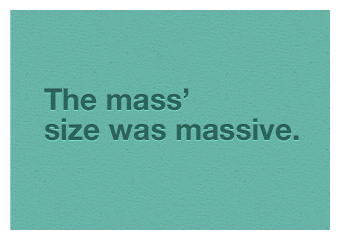 Not every controversial grammar rule out there can brag that it managed to inspire legislation. In 2007, the Arkansas house voted to officially denote possessives as "Arkansas's" as opposed to the more standard "Arkansas.'" Needless to say, this not-at-all-arbitrary act drew its fair share of hissing from grammar purists offended by their apparent affront.
 -
"E-mail" vs. "email"
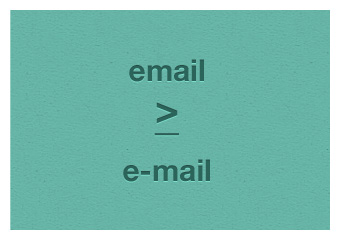 So yeah. After years of pressure, the AP Stylebook declared that "e-mail" should now be written as "email." And with that came the biggest controversy involving a hyphen since Mariner I. Because nothing in life is more serious than the correct abbreviation of "electronic mail."
 -
Universal grammar rules
 With a name like that, how could this theory whip up anything but arguments? Usually attributed to influential linguist Noam Chomsky, the idea of universal grammar rules involves the cognition behind language structures. Its core concept posits that something in every human brain dictates grammar rules, meaning some elements remain static across even vastly different speakers.
 -
The fact that there are different kinds of dashes
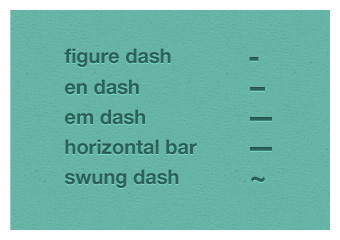 Aside from the hyphen, most non-professionals (and probably even some professionals) don't know when to use each one. They kind of all look the same when one reads rather than copy edits — a phenomenon which, of course, detractors will constantly note.
 -
"Who" vs. "Whom"
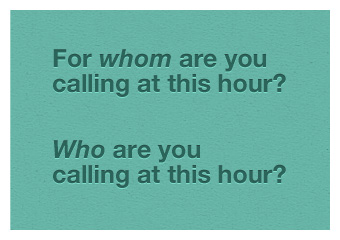 Even more than "good" and "well," misusing "who" and "whom" is guaranteed to set a grammarian's sphincter on fire. "Whom" comes into play as the object of a preposition or the objective case, while "who" is a subjective pronoun. But they don't have to know you know.
Updated 12/21: Thanks to our readers for helping us correct a couple of typos!