Career Profile: Police Officer
 Why Is Police Work a Job of Tomorrow?
As U.S. cities become more dense, additional police officers will be required to patrol them and secure their safety. Employment opportunities for uniformed police officers are expected to grow 11 percent, according to the Bureau of Labor Statistics. Uniformed police officers make an average salary of $47,460 annually.
What Does a Uniformed Police Officer Do?
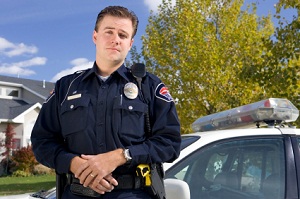
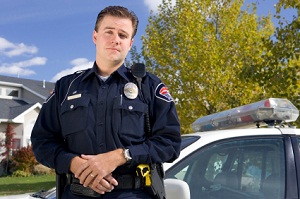
Police officers have varying responsibilities depending on their fields of specialty and the size of the police department in which they are employed. However, all city-employed police officers typically must respond to emergency calls as well as perform regular surveillance patrols around neighborhoods. These patrols are usually done in pairs, and during surveillance, the police officers are responsible for resolving any public disputes that may arise and act as figures of authority to keep the streets safe. Sheriffs and deputy sheriffs act as police officers on a county level, and state police officers, also known as highway troopers, generally enforce traffic laws and respond to vehicle accident scenes.
What Kind of Training Do I Need to Become a Uniformed Police Officer?
Uniformed police officers must have at least a high school diploma, although an increasing number of police departments require applicants to have a college associate or bachelor's degree in criminal justice as well. Many agencies will pay for their employees to earn a degree in criminal justice while they are employed. After completing the necessary education to apply for a law enforcement position, prospective police officers must also undergo job-specific training at a police academy, which typically lasts 12 to 14 weeks.